What Is Reflexology and How Does It Work in Kuta Lombok
What is reflexology and how does it work? A clear, evidence-based guide to the practice, a typical session in Kuta Lombok, and how to book at GLAZE.

After a hot afternoon at Kuta Beach, your feet may be the first part of you asking for a pause. Sand, walking, surf, airport transfers, and late dinners around Mandalika can leave your soles tired even when the rest of you still wants to explore. What is reflexology and how does it work? In simple terms, it's a focused pressure treatment that uses the feet, hands, or ears as the working area, creating a quiet, attentive experience rather than a full-body massage.
At GLAZE in Kuta Lombok, reflexology can be enjoyed as a stand-alone wellness treatment or combined with a wider ritual, such as Balinese massage, deep tissue massage, aromatherapy, or a restorative beauty appointment. The most useful expectation is modest and practical: you may leave feeling calmer, more grounded, and more aware of your feet, but reflexology isn't a medical treatment and shouldn't replace professional care.
Table of Contents
- A Calm Introduction to Reflexology in Kuta Lombok
- The Long History Behind the Foot Map
- How Reflexology Is Believed to Work
- What the Evidence Shows
- What a Reflexology Session Feels Like at GLAZE
- Safety, Contraindications and Where Reflexology Fits
- Choosing Reflexology as Part of Your Recovery
- Quick Answers for First-Time Guests
A Calm Introduction to Reflexology in Kuta Lombok
A reflexology session usually begins with you settling into a cool, quiet treatment room after Lombok's heat. Your therapist may work on your feet, hands, outer ears, face, or lower legs, depending on the style of treatment and your comfort. Most commonly, the therapist applies thumb and finger pressure to mapped points on the feet, hands, or ears, with the traditional idea that those points correspond to organs, glands, and other body regions. The National Center for Complementary and Integrative Health describes reflexology in these terms while noting that organ-specific healing claims haven't been proven.
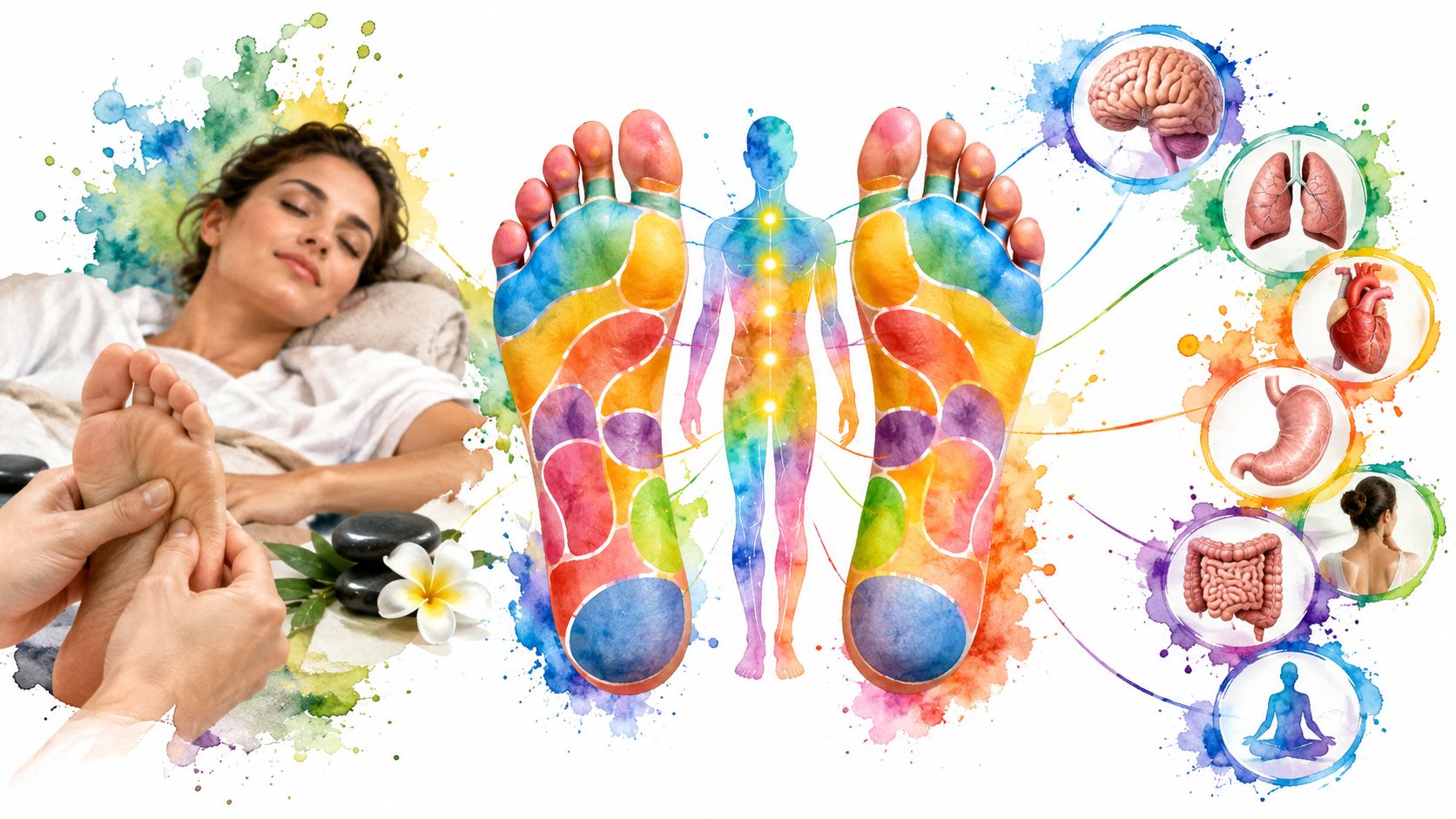
The maps are best understood as traditional practitioner frameworks, not anatomical charts accepted by modern medicine. A foot map may divide the sole into zones and label areas with names such as the head, spine, digestive system, or chest. That gives the therapist a structured way to work, but it doesn't prove that pressing one point directly stimulates the matching organ.
What happens first
At GLAZE, you might begin with a welcome drink and a short conversation about pressure, sensitive areas, recent travel, and what you want from the visit. A warm foot soak can help you transition from a beach day or scooter ride into a slower sensory setting.
The therapist then works gradually, noticing areas that feel tender, tight, or granular under the thumb. Those sensations may guide pressure and pacing, but they shouldn't be interpreted as a diagnosis. A sensitive spot doesn't prove that a particular internal organ is unwell.
Reflexology sits comfortably inside a broader house-of-wellness routine in Kuta Lombok. A guest may choose a 30-minute, 45-minute, or 60-minute appointment, either on its own or alongside a Balinese or deep-tissue massage. A typical reflexology appointment generally lasts 30 to 60 minutes, with many sessions structured around focused work on each foot, as described in this clinical overview of reflexology sessions.
Practical rule: Choose reflexology for focused touch, stillness, and foot comfort. Choose a full massage when your main priority is broader work across the back, shoulders, hips, or legs.
The Long History Behind the Foot Map
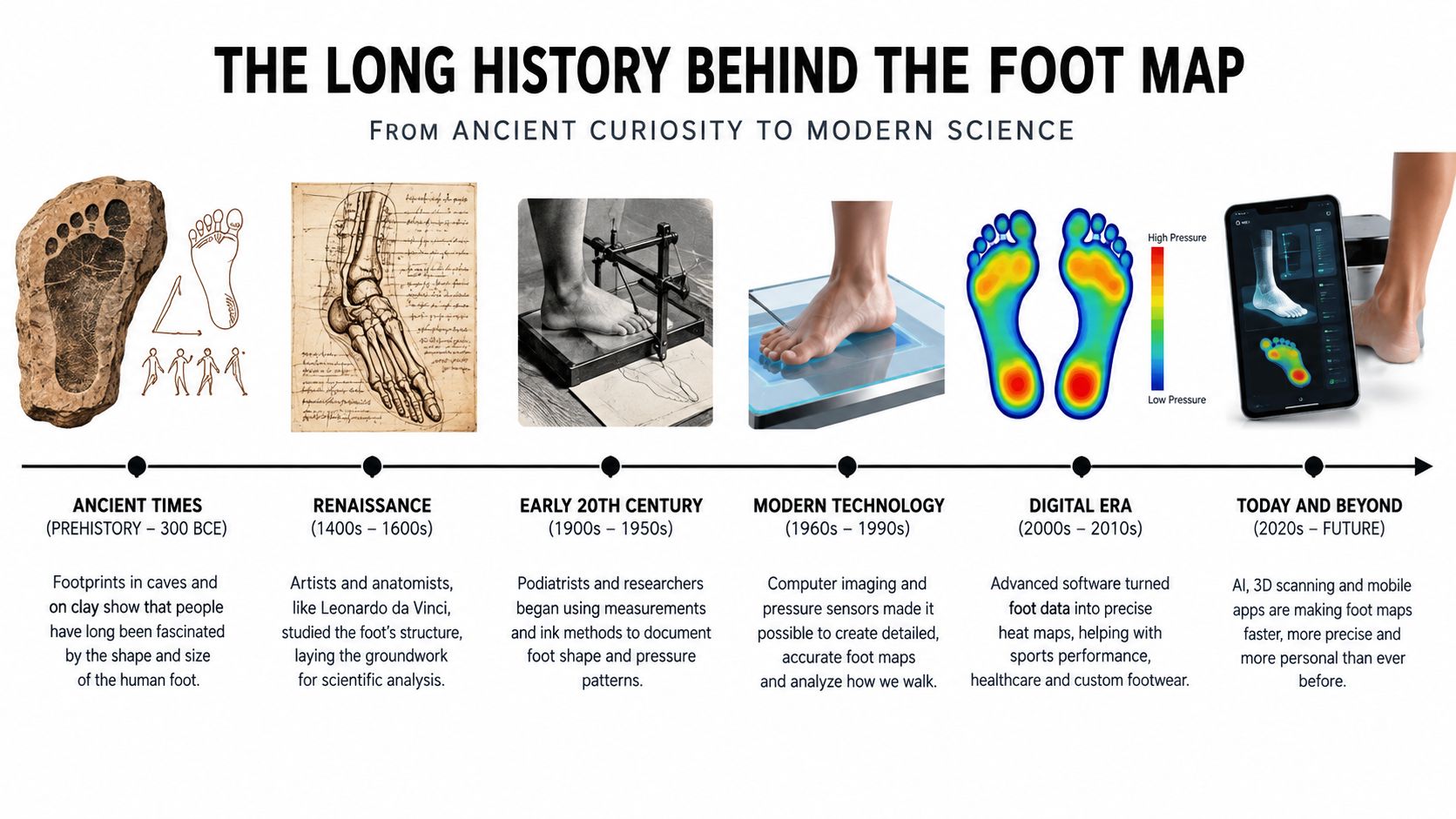
Reflexology didn't appear as one finished system in one place. Some historical accounts trace early pressure-based ideas to ancient Egypt around 2330 BC, while other accounts connect related practices with China and Europe. The record isn't uniform, but it does show that pressure-based healing traditions developed over a long period before modern reflexology took its present form. A historical review in the medical literature outlines this uneven but important lineage.
By the late 14th century, similar zone-based practices were being described in Europe. These methods linked areas of the body with points on the feet or hands, creating an early version of the map-based thinking that many practitioners still use. They weren't modern anatomical diagrams. They were explanatory systems that attempted to organise how touch in one place might relate to sensations elsewhere.
From zone therapy to modern charts
The modern history is often linked with Dr. William Fitzgerald, 1872–1942, who developed zone therapy in the early 20th century. His work helped popularise the idea that the body could be divided into vertical zones and that pressure applied within those zones might influence sensations elsewhere.
Eunice Ingham later developed more detailed foot charts based on this approach. Her diagrams helped shape the foot maps used by many modern reflexologists, including practitioners working in contemporary spa settings.
That distinction matters for travellers. Reflexology is neither an ancient Egyptian discovery nor a technique invented from nothing in the modern era. It's better described as a modern synthesis of older pressure traditions and 20th-century zone therapy. The history explains why the maps remain central to the practice, but history alone doesn't establish that the maps describe a proven biological pathway.
How Reflexology Is Believed to Work
There are two ways to understand how reflexology is believed to work. The first is the traditional reflex-map theory. The second focuses on what happens when a person receives attentive touch in a calm environment.
Under reflex-map theory, the therapist presses a point on the foot, hand, or ear that is said to correspond with a body region. The pressure is thought to send signals through nerve pathways or energetic zones, helping restore balance in the related system. Some traditions also describe channels, meridians, or vital energy. These ideas give reflexology its distinctive language and help practitioners organise a session.
The difficulty is that major evidence reviews haven't demonstrated a clear biological mechanism connecting a particular foot point with a distant organ. The Australian Government's evidence review reports that empirical support for a specific scientific mechanism is lacking. That doesn't mean a guest feels nothing. It means the sensation shouldn't be explained as proven organ-specific stimulation.
The relaxation explanation
The more cautious explanation is nonspecific relaxation. A therapist's steady touch, the warmth of towels, reduced noise, slower breathing, and focused attention on the feet can all move the experience away from stimulation and towards rest. Massage-like sensory input may influence arousal and the autonomic nervous system without requiring a foot map to be anatomically correct.
This is the distinction a traveller can use. You may notice your breathing becoming slower, your jaw unclenching, or your attention moving away from screens and schedules. Those are real experiences, even if they don't prove that pressure on one part of the sole has changed a corresponding organ.
A systematic review of randomised trials reported within-group reductions in markers including blood pressure, heart rate, cortisol, salivary amylase, heart-rate variability, pulse pressure, cardiac output, and BOLD signals. However, only a small subset of studies showed significant differences between groups, which makes it difficult to separate reflexology-specific effects from relaxation, attention, touch, or other treatment factors. The review is available in the medical literature.
At GLAZE, the honest value lies in the whole experience: skilled pressure, a quiet room, time away from the sun and traffic, and permission to rest. That's a meaningful wellness experience, but it isn't proof of a foot-to-organ mechanism.
What the Evidence Shows
Clinical findings remain mixed, so a guest should expect modest, short-term effects rather than a medical treatment. One systematic review of 23 randomised controlled trials found 8 studies suggesting benefit, 14 showing no effectiveness, and 1 equivocal result. Other reviews found no convincing evidence that reflexology is clinically effective for a specific medical condition. NCCIH summarises this cautious evidence picture and the limits of organ-specific claims.
For a traveller in Kuta Lombok, the practical distinction is simple. You may leave one session feeling calmer or less aware of everyday tension, especially after a stressful flight or a physically demanding day. That immediate change does not show that reflexology has healed an organ or treated chronic disease, and several sessions should not be treated as proof of a lasting medical effect.
Reflexology evidence at a glance
| Condition or outcome | Short-term effect | Evidence strength |
|---|---|---|
| General relaxation and stress-related sensations | Some studies suggest possible short-term relief | Mixed and cautious |
| Blood pressure and heart rate | Reviews report within-group reductions, with limited between-group differences | Limited |
| Organ-specific healing | Not proven | No convincing evidence |
| Treatment of a medical condition | Not established by current high-quality evidence | Insufficient |
One trial involving adults with stage-2 hypertension recorded changes after a 15-minute post-treatment assessment: 3.29 mm Hg in systolic blood pressure, 1.71 mm Hg in diastolic blood pressure, and 1.71 beats per minute in heart rate. The largest change was in heart rate. This supports a modest acute calming effect, rather than a strong or durable disease-specific intervention. The trial details are reported in this open-access study.
A useful holiday expectation is to treat reflexology as a calming adjunct. It can give you an hour of focused rest and a pleasant sensory experience, while diagnosis, medication, physiotherapy, and other medical care remain separate needs.
What a Reflexology Session Feels Like at GLAZE
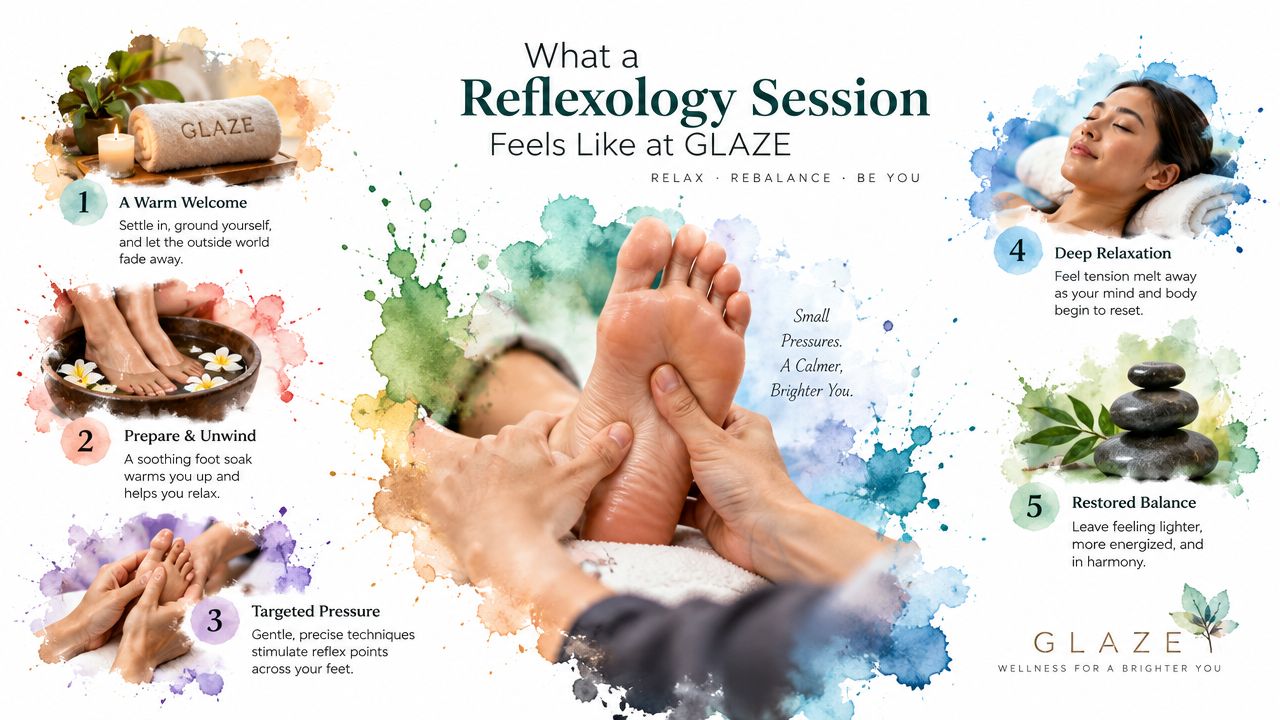
A session at GLAZE follows a gentle progression, giving your body time to leave the pace of the road, the surf, or the airport behind. You'll usually arrive, settle in, and have a brief consultation before the treatment begins. Tell the therapist if your feet are sun-sensitive, sore from walking, or unusually tender.
The first tactile step may be a warm foot soak. It cleanses the skin and gives you a clear transition into the treatment, especially after a morning at Tanjung Aan or a long afternoon moving between Kuta Lombok cafés and beaches.
The treatment in five stages
Arrival and consultation. Share your preferred pressure, sore points, recent activity, and any health information that could affect the session. Clear communication helps the therapist adjust rather than guess.
Warm preparation. A soak, towel, or gentle opening touch prepares the feet. The warmth can make firm pressure feel more comfortable and helps you settle.
Mapping and pressure work. The therapist explores the soles and may notice tender or granular-feeling areas. Firm thumb pressure is applied in small, sustained strokes, with the pace changed when an area feels too intense.
Quiet integration. As the session continues, you may notice deeper breathing, heavier legs, warmth, or a sense of mental quiet. These sensations are consistent with relaxation, not evidence that a distant organ has been treated.
Closing touch. Gentle stretches and slower movements finish the appointment. Take a few minutes before standing, drink water if you're thirsty, and avoid rushing straight into more heavy walking.
A 30-minute express session suits a traveller with limited time between plans or someone trying reflexology for the first time. A 60-minute full session allows a quieter pace and more time on both feet. Many appointments fall within the broader 30 to 60-minute range noted in clinical summaries, although the exact rhythm depends on the spa menu and your selected treatment.
Aftercare suggestion: Leave a little space after your appointment. Let your feet cool naturally, avoid immediately carrying heavy beach gear, and notice how you feel before deciding whether you want more activity.
GLAZE also offers an on-site specialty coffee and matcha bar, so you can re-orient with an espresso, matcha, herbal tea, or another refreshment rather than stepping straight back into the heat. The spa's wider menu includes Balinese massage, deep tissue massage, aromatherapy, facials, manicure, pedicure and nail care, plus relaxation and wellness treatments. It doesn't provide injectables, laser procedures, surgery, or other medical or aesthetic procedures.
Safety, Contraindications and Where Reflexology Fits
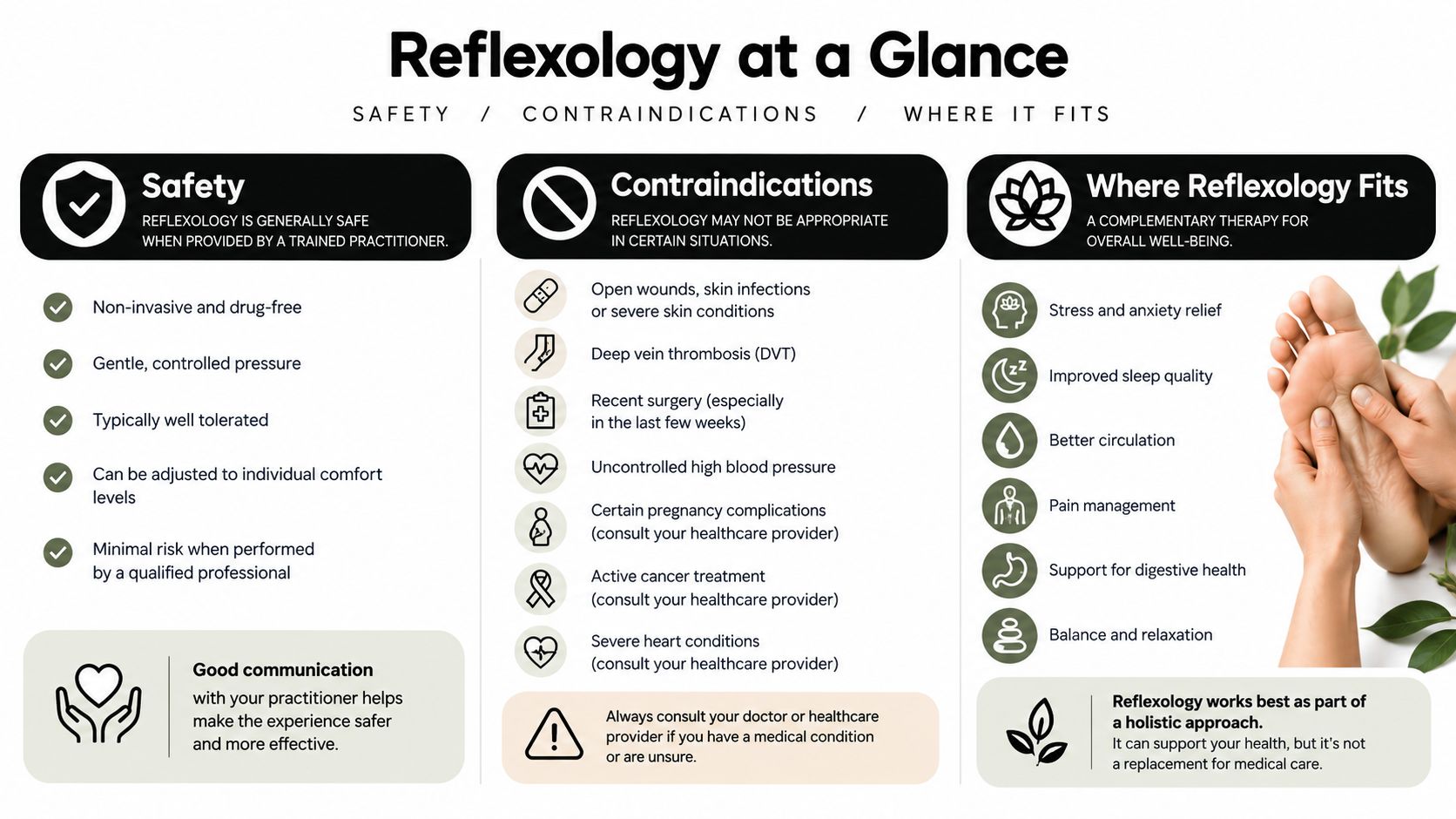
A quiet foot treatment may suit a tired traveller, yet a spa session is not appropriate for every body or every day. Reflexology is generally non-invasive, but pressure on injured, infected, numb, or poorly circulating feet can create problems. A reflexology safety fact sheet outlines situations that may require postponement, modification, or medical advice.
Speak with a qualified healthcare professional before booking if you have:
- A blood clot or deep vein thrombosis. Massage may be unsuitable when a clot is suspected or diagnosed.
- An active foot infection, open wound, or local skin disease. Wait until the area has healed.
- Recent foot or ankle surgery. The therapist needs clear guidance before working near healing tissue.
- Unstable diabetes with neuropathy. Reduced sensation can make pressure harder to judge and injury harder to notice.
- Severe circulation problems. Tell the spa before treatment so your suitability can be assessed.
- First-trimester pregnancy. Avoid reflexology during this stage unless your healthcare professional and therapist agree. Later pregnancy may call for lighter pressure or a different position.
Hand reflexology may be an option when foot work is unsuitable, but it still needs disclosure and adjustment. Mention pregnancy, chronic illness, acute illness, unusual sensitivity, or marked fatigue before the session starts.
What you might notice afterwards
A session should feel manageable throughout. Some guests may notice temporary foot tenderness, nausea, shaking, sleep disturbance, lightheadedness, soreness, or emotional sensitivity afterwards. Stop if the treatment feels wrong, and seek medical advice if a reaction concerns you or does not settle.
Reflexology is not medical foot care. A therapist can adjust pressure and support relaxation, but should not diagnose disease from a tender point or advise you to stop prescribed treatment.
At GLAZE, a guest might choose reflexology after a demanding surf session, after arriving in Lombok with jet lag, or between beach plans on a rest day. One visit may feel like focused attention for hot, tired feet. Several visits may help you decide whether that calming routine suits your travels, but reflexology remains a comfort-focused service, not a replacement for healthcare.
Choosing Reflexology as Part of Your Recovery
A single session may be enough if your aim is simple: settle after a flight, soften the sensory load of a hot day, or give tired feet focused attention. If you're exploring sleep, anxiety, or ongoing tension, a series may create a more consistent routine, but research doesn't establish a guaranteed session count or lasting clinical outcome. Set one intention per visit rather than asking one treatment to solve everything.
You can build a personal rhythm around the wider GLAZE menu:
- After deep tissue massage: Add foot reflexology when your shoulders and back have received broad pressure but your feet still feel overworked.
- After a facial: Finish with hand reflexology if you want to remain still without returning to a full-body treatment.
- Between yoga or active recovery sessions: Choose a shorter appointment when you want quiet time without committing to a longer ritual.
- After beach days: Reflexology can give sandy, sun-warmed feet a slower transition before dinner in Kuta Lombok.
Track simple observations, such as whether you fall asleep more easily, whether your shoulders feel less guarded, or whether your feet feel more comfortable while walking. These notes won't prove a reflex map, but they can help you decide whether the experience earns a place in your travel routine.
For guests moving between Kuta Beach, Mandalika, Selong Belanak, and Tanjung Aan, GLAZE can be one calm stop in a day that otherwise asks your body to keep moving. Book a specific service based on your intention, such as reflexology for focused footwork, Balinese massage for flowing full-body relaxation, or deep tissue massage for firmer muscular work.
Quick Answers for First-Time Guests
How many sessions do I need? One session may be enough to feel relaxed. A specific ongoing concern may call for repeated visits, but reflexology can't promise a fixed result or timeline.
What should I wear? Choose loose trousers or shorts and easy footwear for after the foot soak. You won't need to undress for focused foot work.
Is reflexology safe during pregnancy? Avoid it in the first trimester unless your healthcare professional advises otherwise. Later sessions may need lighter pressure and modified positioning, and you should always tell the therapist that you're pregnant.
Can I combine it with massage? Yes. Reflexology focuses on the feet, hands, or ears, while Balinese or deep tissue massage works across broader areas. Combining them can create a more complete spa visit, but tell the therapist if you're tired or sensitive.
What's the difference between express and full treatment? A 30-minute express appointment is useful between plans. A 60-minute full foot session allows a slower pace and more time for detailed pressure work.
When should I book after flying or surfing? After a long-haul flight, give yourself time to arrive and mention fatigue or swelling during consultation. After intense surf, a session can be more comfortable once you've cooled down, showered, and had a little rest.
Where is the spa? GLAZE is at GLAZE, House of Wellness, Jl. Raya Kuta No. 20, Kuta, Central Lombok, NTB 83573.
GLAZE - House of Wellness offers reflexology alongside Balinese massage, deep tissue massage, aromatherapy, facials, nail care, and a specialty coffee and matcha bar in Kuta Lombok. For a quiet post-beach reset or a focused foot treatment between Mandalika plans, visit GLAZE - House of Wellness and reserve your treatment online.
- reflexology
- reflexology guide
- Kuta Lombok spa
- wellness treatments
- foot massage