How to Glow Face Skin in Kuta Lombok
Learn how to glow face skin with a Kuta Lombok routine. Cleansing, exfoliation, SPF, treatments and lifestyle tips for dewy, radiant results.

You step off a boat in Kuta Lombok with salt drying on your shoulders, sunscreen sitting heavily across your cheeks, and the unmistakable dullness that follows a red-eye flight. After a couple of days between Kuta Beach, Mandalika and the water, your skin may feel tight in some places, slick in others, and less luminous than it did at home. To understand how to glow face skin, the answer in a tropical climate usually starts with barrier care, not another aggressive brightening serum.
At GLAZE, the practical approach is simple. Support the skin's ability to hold water, remove residue without stripping it, protect against ultraviolet exposure, and use professional hydration when home care has reached its limit. The result you're looking for isn't greasy shine. It's a smoother surface that reflects light evenly.
Table of Contents
- Why Kuta Lombok Changes the Glow Equation
- The Cleansing and Exfoliation Sequence
- Ingredients That Actually Build Luminous Skin
- Sunscreen as the Non-Negotiable Glow Habit
- Where an In-Clinic Hydrating Facial Adds Value
- Sleep, Water, Diet and Recovery for Visible Glow
- A Simple Weekly Routine You Can Keep
Why Kuta Lombok Changes the Glow Equation
A traveller arriving in Kuta Lombok often blames dullness on inadequate skincare. In practice, the climate and the journey may be doing more than the product shelf can compensate for. Equatorial sun, salt air, sweat, changing humidity and cool villa air-conditioning create a demanding environment for the skin barrier.
Facial skin is naturally more hydrated than many other body sites, but hydration still varies across the face. A systematic review and meta-analysis of healthy adults reported the highest hydration measurement at 64.34 for the periorbital area and the lowest at 12.5 for the back, while also finding that moisture differs by facial region. The review included pooled sample sizes as large as 3,202 for cheeks and found no statistically significant hydration differences by age group or sex in the included comparisons. Read the systematic review on facial skin hydration
Four stressors travellers notice first
- Sun exposure: Long beach days and outdoor trips add repeated ultraviolet exposure, which can leave tone looking less even and texture less smooth.
- Humidity swings: Sea air may feel moist, while an air-conditioned room can leave the surface tight by morning.
- Sweat and salt: Residue from swimming, surfing and sunscreen can sit around the nose, jawline and hairline until it's properly removed.
- Travel strain: Overnight flights, unfamiliar sleep and long days can make the face look tired before you've even reached Tanjung Aan or Selong Belanak.
Practical rule: In Lombok, treat dullness first as a possible hydration and barrier problem. Reach for correction only after the skin feels comfortable.
A glow routine therefore needs restraint. Gentle cleansing removes the day without taking away protective lipids. A well-chosen moisturiser helps the stratum corneum retain water. Sunscreen protects the texture and tone you're trying to preserve. Exfoliation and retinoids can have a place, but they need to be introduced carefully, especially after sun, sea swims or repeated washing.
The Cleansing and Exfoliation Sequence
The basin sequence matters. Exfoliation can make the surface feel instantly smoother, but it can also leave skin dry and irritation-prone when you don't follow it with immediate barrier support. Consumer dermatology guidance recommends exfoliating normal or combination skin about twice weekly, using light circular motions, lukewarm water and moisturiser afterwards. See practical exfoliation guidance from Women's Health
Start with a gentle cleanse
Use a low-foam cleanser and massage it over damp skin for about sixty seconds. That timing comes from the practical protocol rather than a requirement for every cleanser. The purpose is to loosen sweat, salt, sebum and sunscreen while keeping the skin's lipid structure as comfortable as possible.
Lukewarm water is the better choice after a beach day. Hot water can increase the sensation of tightness, particularly when the face has already been exposed to wind, salt and sun. Research on cleansers notes that strong surfactants can damage skin proteins and lipids, contributing to dryness, irritation, itch and after-wash tightness. Moisturisers help restore lipids, improve hydration and reduce water loss. Review cleanser and moisturiser effects in this dermatology study
Exfoliate with control
Keep exfoliation to two to three evenings weekly at most, and reduce it when your skin feels hot, stings or looks flushed. A 5 to 8 percent PHA or a soft lactic-acid formula is generally a more considerate choice than a gritty scrub, particularly if you're sleeping in dry air-conditioning.
Apply the exfoliant after cleansing, not immediately after a long, hot shower. You're clearing surface buildup so light can reflect more evenly, but you're not trying to polish the face until it feels raw.
Replace water immediately
Follow with a humectant toner, essence or serum while the skin is still slightly damp, then seal it with moisturiser. Glycerin and hyaluronic acid are familiar options, but the product should feel comfortable rather than tacky or overly active.
The three mistakes I see most often are over-rubbing, double-cleansing with harsh sulphates and using an acid every day. They may create a short-lived sense of smoothness, but persistent tightness and redness will flatten radiance again.
Ingredients That Actually Build Luminous Skin
A useful ingredient list starts with function, not trend appeal. Humectants attract water into the stratum corneum, while ceramides and cholesterol-rich moisturisers support the structure that helps keep that water in place. A tenth serum rarely compensates for a cleanser that strips or a moisturiser that disappears before morning.
Retinoids are more targeted. They work at night and can support skin quality and photoaging care, but they're not ideal on a face that has just spent a full day in the sun. Introduce one slowly, buffer it with moisturiser at first, and pair daytime use of the routine with broad-spectrum SPF 30 or higher. Read retinoid and sunscreen guidance
Vitamin C can be useful in the morning, particularly in an L-ascorbic acid or MAP formula, but storage matters. Humid luggage, heat and frequent opening can make a vitamin C product oxidise more quickly, so keep it tightly closed and away from direct sun.
| Ingredient Family | What It Does for Glow | Best Time to Apply | Layering Note |
|---|---|---|---|
| Humectants, such as glycerin, hyaluronic acid and polyglutamic acid | Draw water into the stratum corneum, creating a softer, fuller surface | Morning or evening | Apply to damp skin, then cover with an occlusive moisturiser |
| Ceramides and cholesterol-dominant moisturisers | Support the barrier and reduce the dry, uneven surface that scatters light | Especially useful at night or after cleansing | Use as the dependable base before adding stronger actives |
| Retinoids | Support cell renewal and pigment turnover | Night only | Buffer with moisturiser during introduction and use daytime sunscreen |
| Vitamin C, including 10 to 15 percent L-ascorbic acid or MAP | Supports a brighter, more even-looking finish | Morning | Keep away from heat and humidity, and avoid layering with too many other actives |
My layering rule is deliberately plain: one humectant, one barrier cream, one active. If your skin is already sensitised from travel, skip the active and keep the first two.
Sunscreen as the Non-Negotiable Glow Habit
Sunscreen protects every other step in the routine. Use a broad-spectrum SPF 30 or higher with UVA and UVB protection, applying it at least 15 minutes before going outside and reapplying every 2 to 4 hours, with more frequent application after sweating or water exposure, as advised in CDC travel guidance for sun exposure.
Cover the face, ears, neck and backs of the hands. Travellers often miss the hairline, jawline, under-chin area and ears, especially when sunglasses and helmet straps create awkward edges. A mineral-leaning formula containing zinc or titanium dioxide may feel comfortable after exfoliation, while a hybrid filter can sit neatly beneath makeup.
Cloud cover isn't a reason to skip it. If you're heading from Kuta Beach to a café, taking a scooter towards Mandalika or spending the afternoon at Selong Belanak, make SPF part of leaving the room rather than a last-minute layer at the shoreline. A hat and UV-blocking sunglasses add useful physical coverage during the strongest part of the day.
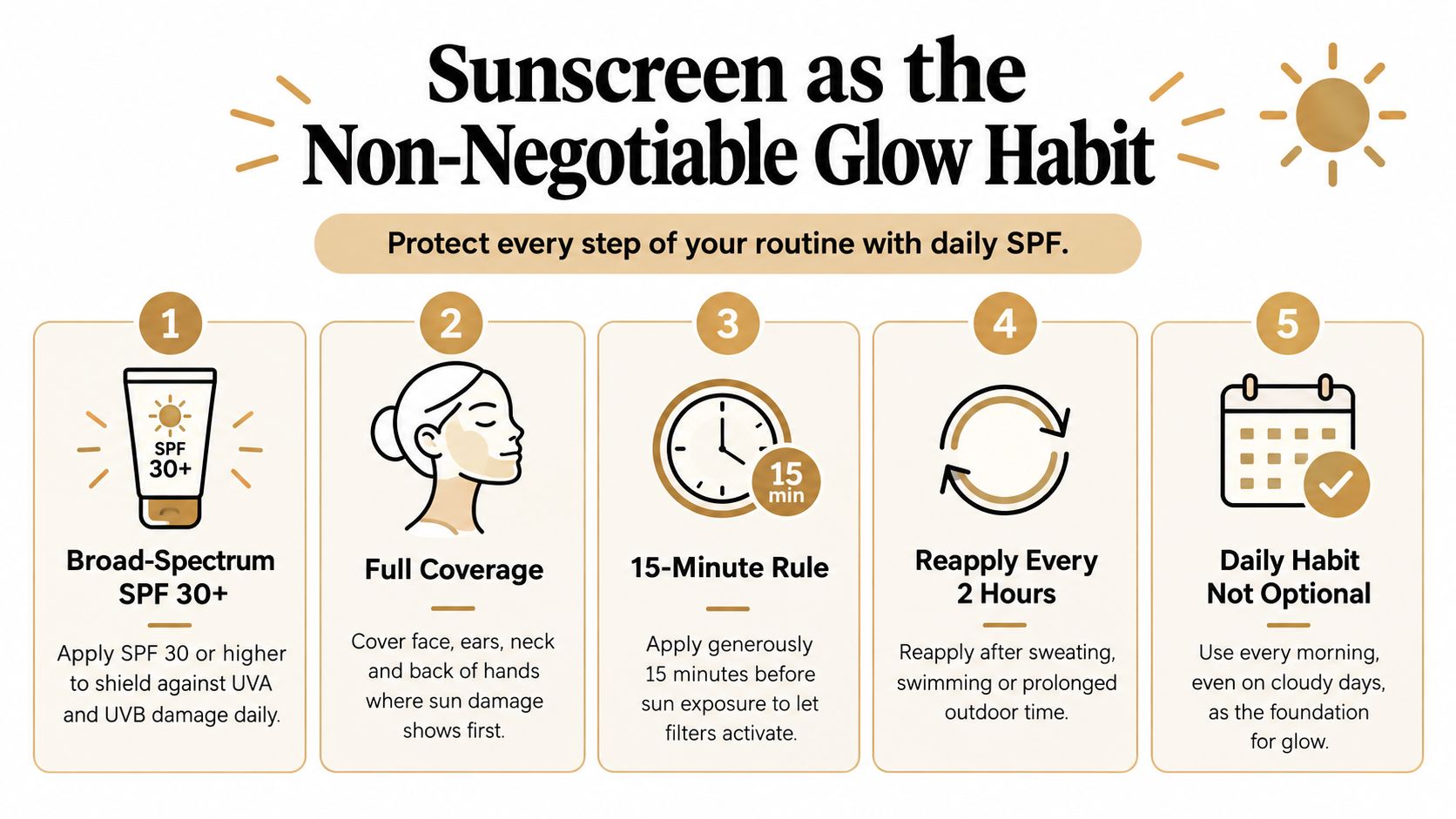
The Nambour trial provides unusually strong long-term evidence for this habit. Over 4.5 years, daily sunscreen use produced 24% less skin ageing than discretionary use, with a relative odds of 0.76 and a 95% confidence interval of 0.59 to 0.98. The daily-use group showed no detectable increase in skin ageing after that period. Review the sunscreen trial evidence
Where an In-Clinic Hydrating Facial Adds Value
After several days of sunscreen, salt, heat and travel, skin may feel tight in some areas, congested in others, or look flat. Home care keeps the barrier supported, while a professional facial concentrates hydration, timing and skilled touch without asking you to add more products to an already stressed routine.
At GLAZE - House of Wellness, you can choose a cleansing, hydrating or anti-ageing facial according to your skin's condition. A therapist can adjust pressure, pace and product texture. Warm, reactive skin needs a gentler approach. Tight, depleted skin may respond better to a more replenishing finish.
Home care compared with professional care
| At-home routine | In-clinic hydrating facial |
|---|---|
| Builds a dependable daily foundation | Concentrates hydration and hands-on technique into one appointment |
| Works gradually through repeated cleansing, moisturising and SPF | Offers professional assessment and treatment adjustment |
| Convenient before a beach day or evening out | Useful when skin feels congested, tired or visibly dehydrated after travel |
| Requires discipline and product restraint | Provides a calm pause without replacing daily care |
A radiance-serum clinical test found significantly higher hydration on both cheeks at day 1, day 21 and day 45, with simultaneous glow gains measured by a Skin-Glossymeter and no apparent adverse events. A separate placebo-controlled trial reported hydration improvements of 5.67% at day 28 and 15.69% at day 56, alongside better radiance and glow after eight weeks. Read the clinical skin-radiance evidence
The practical takeaway is modest but useful. Immediate hydration can make skin look smoother and fresher, while consistent home care helps maintain that appearance. A facial does not create permanent change, and an aggressive treatment can be a poor choice before sun exposure, swimming or a long scooter ride.
For a traveller spending an evening in Kuta Lombok, a gentle hydrating facial can serve as a reset before dinner, a celebration or photographs. Keep the appointment calm, avoid unnecessary exfoliation afterwards, and continue protecting the skin from the tropical sun.
Book your treatment at GLAZE - House of Wellness if your face feels tight, over-cleansed or dull after the journey. The facial can sit alongside a Balinese massage, deep tissue massage, aromatherapy, reflexology or a quiet coffee and matcha break, depending on the kind of recovery your day needs.
Sleep, Water, Diet and Recovery for Visible Glow
Glow is built during recovery as much as during application. A late arrival, several early surf starts and evenings spent in warm, noisy surroundings can leave the face looking drawn even when the skincare itself is well chosen.
Prioritise a cool, dark room and a consistent wind-down. The practical target in this routine is seven to nine hours of sleep, with a phone-down habit before bed. The supplied wellness protocol identifies the period between 11pm and 3am as important for skin repair enzymes, but the broader point is simpler: repeated late nights make it harder for the body and skin to recover.
Make hydration easy while travelling
Drink steadily through the day rather than waiting until you feel parched. If you sweat heavily while surfing or walking between beaches, coconut water or an appropriate electrolyte drink can be more practical than trying to catch up at night.
Food can stay local and uncomplicated. Choose grilled fish, eggs, pumpkin, avocado, papaya, berries, leafy greens and seaweed where available. A meal at a Lombok warung with vegetables and quality protein is usually more useful than carrying a complicated supplement routine, especially when your appetite and schedule are already changing.
Cool the routine after sun
After outdoor time, use a cool shower and a simple moisturiser. Aloe or centella gel can feel soothing on heated skin, but avoid treating cooling sensation as proof that the skin has fully recovered. Leave a rest day between strong exfoliation and other active ingredients when your face has had significant sun or salt exposure.
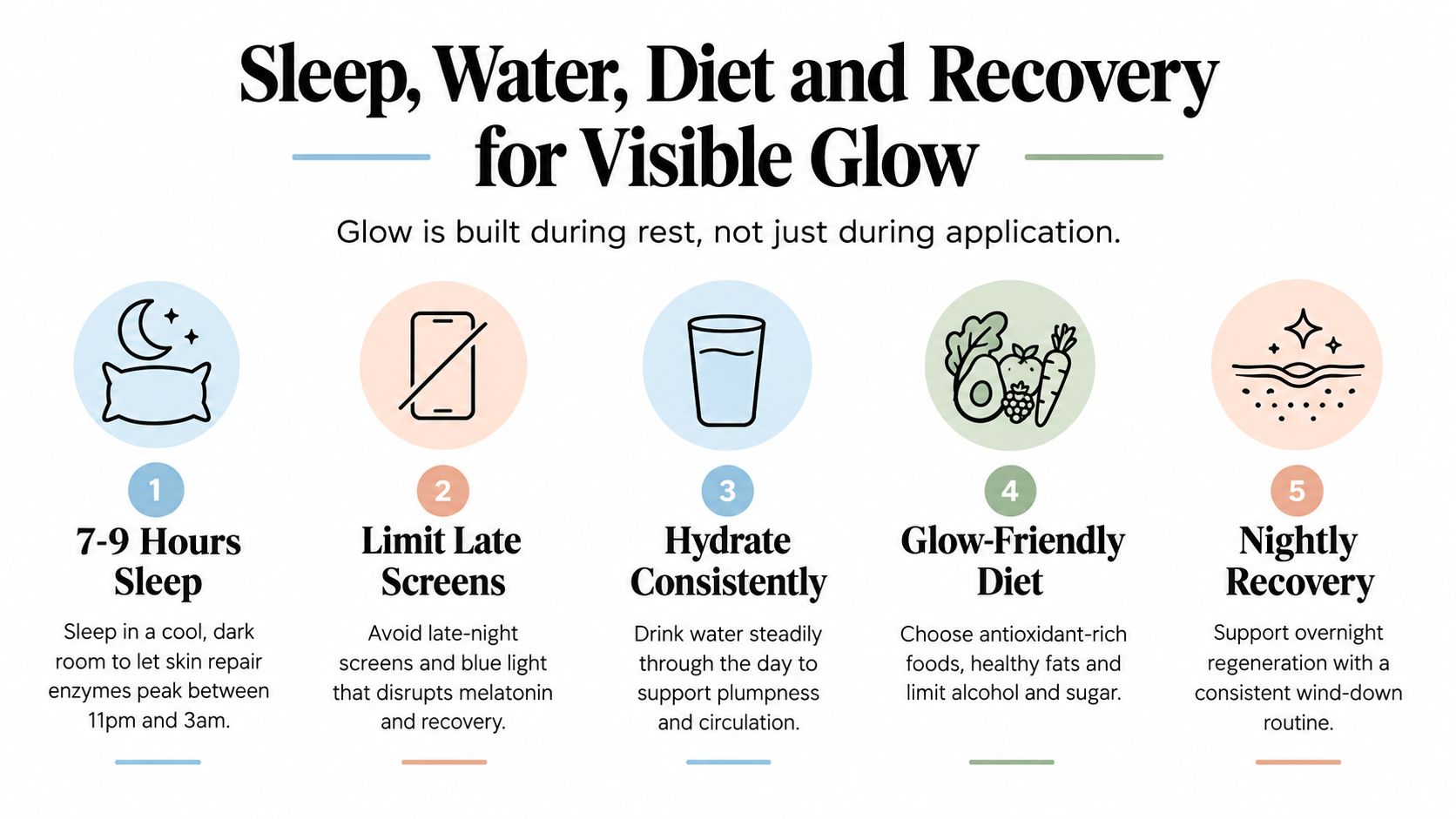
A ceramide-containing sunscreen study found reduced redness of 11.89%, lower transepidermal water loss of 22.96%, and increased skin hydration of 21.96% after four weeks. Read the clinical barrier and sunscreen findings The useful lesson is that radiance can come from lowering water loss and visible irritation, not adding a glossy finish.
A Simple Weekly Routine You Can Keep
Lombok days rarely follow a fixed plan. Beach mornings, scooter rides, long lunches, air-conditioned rooms and spontaneous outings all test a routine, so keep the foundation small enough to follow when you are tired.
The seven-day rhythm
Monday reset: Use a low-pH cleanser in the morning, apply SPF before leaving, then cleanse gently and moisturise at night.
Tuesday hydration: Add a humectant to slightly damp skin in the evening, followed by a lightweight barrier moisturiser.
Wednesday exfoliation: Choose one evening for controlled exfoliation. Finish with recovery moisturiser, and keep retinoids or other strong actives separate.
Thursday protection: Reapply sunscreen after swimming, sweating or towelling. Add antioxidant support in the morning only if the skin feels calm.
Friday nourishment: Use a nourishing serum and barrier-repair cream at night. Address one concern at a time.
Saturday facial: A hydrating or luminous facial at GLAZE can provide a weekly reset before an event or a long evening out.
Sunday review: Keep products light, note dry or congested areas, and set out what you will use during the week.
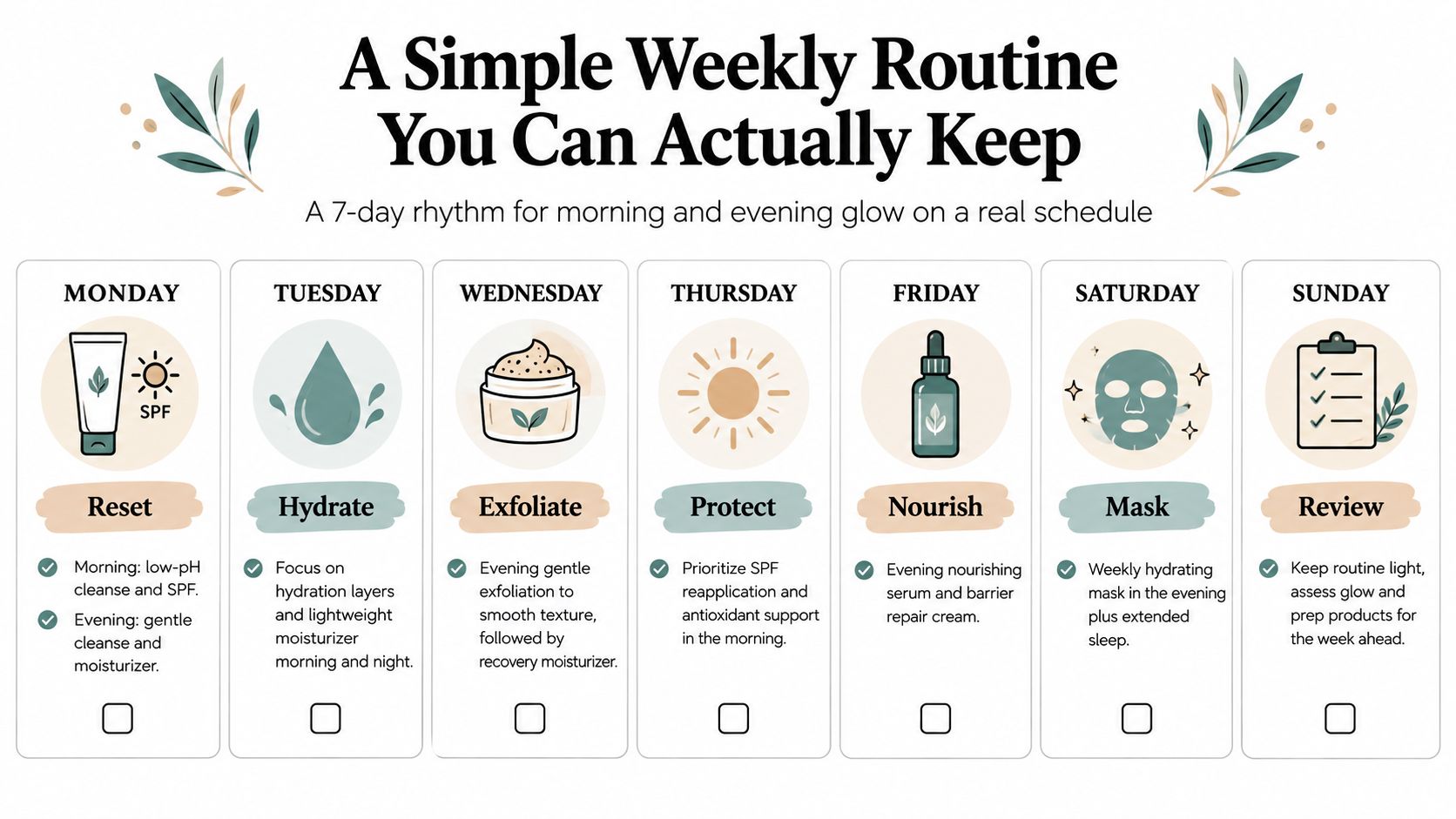
Build recovery into the itinerary. After surfing, coconut water and a proper meal may be easier to maintain than a complicated hydration plan. A 9pm phone-down cutoff creates a clear evening boundary, while leafy greens from a local warung offer a practical food choice without relying on a cupboard of supplements.
The essentials: cleanser, SPF 30 or higher, and night hydration. Add exfoliation, serums or treatments only when the day and your skin allow.
At GLAZE, the menu also includes manicure, pedicure and nail care, relaxation and wellness treatments, and an on-site specialty coffee and matcha bar. The address is GLAZE, House of Wellness, Jl. Raya Kuta No. 20, Kuta, Central Lombok, NTB 83573.
For a calm tropical reset, GLAZE offers cleansing and hydrating facials alongside Balinese massage, deep tissue, aromatherapy, reflexology, nail care and relaxation treatments. Booking around a beach day, an evening in Mandalika or the journey home can give the routine a consistent treatment point without replacing the daily barrier-care steps.
- how to glow face skin
- glowing skin routine
- Kuta Lombok spa
- facial hydration tips
- natural dewy skin