Gel Manicure vs Regular Manicure in Kuta Lombok
Gel manicure vs regular manicure in Kuta Lombok compared — wear time, curing, nail health and aftercare to help you choose at GLAZE.
You've just arrived in Kuta Lombok, perhaps with salt still on your skin after Kuta Beach and a few active days around Mandalika ahead. Your nails look neat now, but you're wondering whether gel manicure vs regular manicure is the better choice for beach time, frequent handwashing, photographs, and the length of your stay.
The central difference is wear. Gel commonly remains chip-resistant for about 14–21 days, while regular polish typically stays presentable for around 5–7 days, according to industry coverage of gel polish's evolution and wear. That extra time can feel wonderfully simple during a Lombok holiday, but gel also brings a more involved removal process and different sensitivity considerations.
At GLAZE, the decision can be made calmly, without rushing between a treatment and a beach transfer. The choice comes down to four practical questions: how long you're staying, how actively you'll use your hands, how often you want to change colour, and how your nails respond to removal.
Table of Contents
- Introduction to Gel Manicure vs Regular Manicure in Kuta Lombok
- What Each Manicure Is and How It Works
- Gel Manicure vs Regular Manicure Side by Side Comparison
- Nail Health Removal and Sensitivity Considerations
- Which Manicure Suits Your Stay in Lombok
- Aftercare That Keeps Your Manicure Looking Fresh
- Making Your Choice and Booking at GLAZE House of Wellness
Introduction to Gel Manicure vs Regular Manicure in Kuta Lombok
A regular manicure suits a traveller who wants a fresh colour for a short escape, an easy change before flying home, or a lighter-feeling finish. Gel is often more convenient for a longer stay, especially when your plans include swimming, surf sessions, padel, luggage handling, and repeated handwashing.
The difference is not "classic versus modern". Each service uses a different way of setting polish, and that affects durability, flexibility, removal, and maintenance. Regular polish air-dries, while gel is cured under UV or LED light. The cured gel film is harder and more resistant to visible tip wear, while regular polish is easier to remove and replace.
A traveller staying in Kuta Lombok for a few days might appreciate the freedom of regular polish. Someone spending longer in Central Lombok, moving between Tanjung Aan, Selong Belanak, and evening plans in Mandalika, may prefer not to think about chips at all. Neither option is automatically right for everyone.
At GLAZE, the manicure experience is designed around a steady pace and precise care. You can choose from manicure and nail-care services within a calm, design-led wellness setting, then take a quiet pause with specialty coffee or matcha at the on-site bar. The atmosphere suits a pre-event appointment, a post-travel reset, or a slower afternoon between beach plans.
The comparison below keeps the decision practical. Wear time matters, but so do the feel of the finish, the curing method, removal quality, and what your nails need between appointments.
What Each Manicure Is and How It Works
Regular polish and the air-dry process
A regular manicure uses classic nail polish, which sets as solvents evaporate into the air. There's no lamp involved, and the finish continues to harden after application, so careful handling remains important while you're leaving the salon and settling into your day.
The service usually begins with nail shaping, cuticle care, and preparation of the nail surface. Polish is then applied in controlled layers, followed by a top coat. The result feels relatively light and flexible, and removal is straightforward with regular nail-polish remover and cotton.
That ease makes regular polish useful when you enjoy changing colours or want a lower-commitment appointment. It also means the finish can be more vulnerable to pressure, water exposure, and everyday knocks before it has fully set.
Gel and the curing process
Gel polish uses a photopolymerized resin. Each layer is cured under a UV or LED lamp, creating a harder film with a glossy surface. As this explanation of gel polish notes, gel requires UV or LED curing, whereas regular polish air-dries through solvent evaporation.
In the chair, the rhythm feels different. After preparation, a thin base layer is applied and cured, followed by colour and top coat. The lamp sets each layer as the service progresses, so the finished surface is dry to the touch once the final cure is complete.
That curing step explains why gel tends to resist chips more effectively. It also explains why gel feels more structured on the nail than regular polish. The coating is designed to stay in place, which is helpful for active hands but makes gentle, professional removal especially important.
At GLAZE, House of Wellness, Jl. Raya Kuta No. 20, Kuta, Central Lombok, NTB 83573, the experience centres on preparation, careful application, and a clean, luminous finish rather than unnecessary complexity. You'll be guided through the suitable option for your plans and nail preferences.
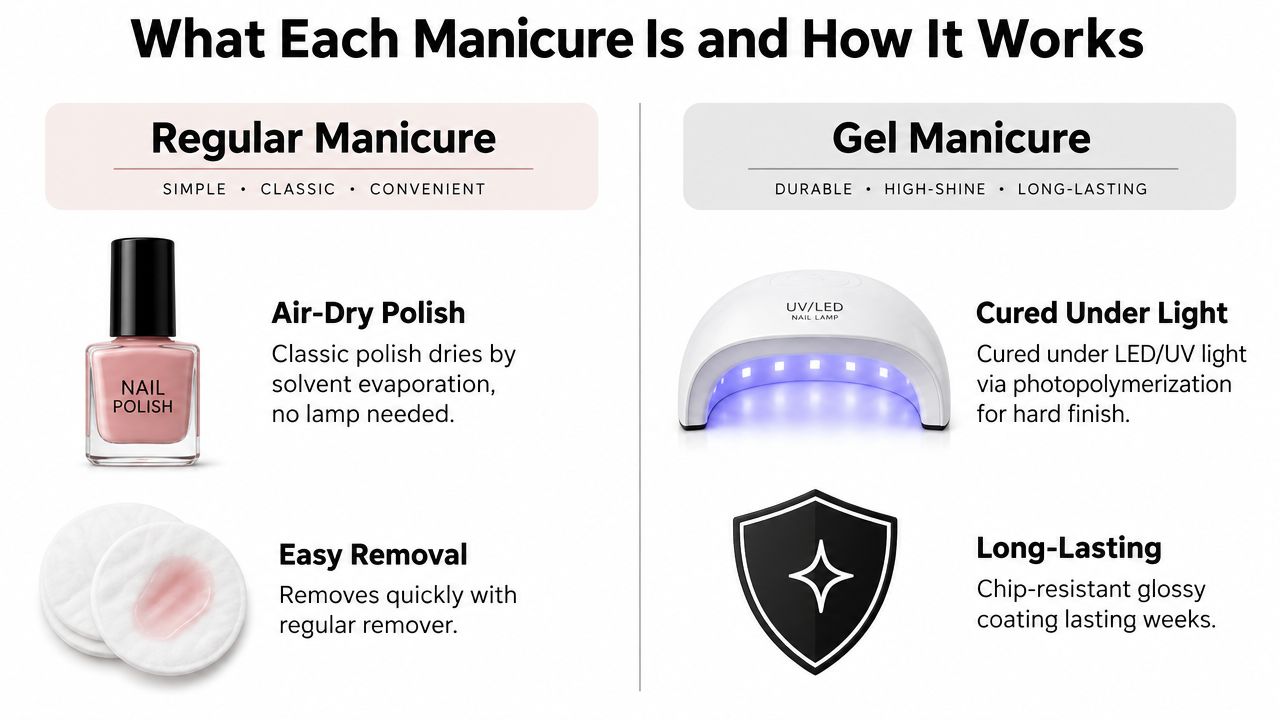
For a visual explanation of the setting process, this gel and regular manicure comparison video shows the distinction between air-dried polish and cured gel in a simple format.
Gel Manicure vs Regular Manicure Side by Side Comparison
The clearest way to choose is to compare the services by the moments that matter during a trip. Longevity, finish, drying, maintenance, and removal all shape how enjoyable the manicure feels after you leave the salon.
| Criteria | Gel Manicure | Regular Manicure |
|---|---|---|
| Typical wear | About 2–4 weeks, depending on the source and service | About 5–7 days |
| Setting method | Cured under UV or LED light | Air-dries through solvent evaporation |
| Finish | Hard, glossy, chip-resistant surface | Lighter, more flexible polished finish |
| Drying concern | Cured layer by layer, dry to touch after final cure | Can smudge while the polish continues to set |
| Removal | Requires a careful soak-off process and may involve filing | Usually removed with regular nail-polish remover |
| Best travel fit | Longer stays, active routines, events, and frequent handwashing | Short visits, colour changes, and easy departure-day removal |
Wear time and trip length
Gel's main advantage is durability. A consumer comparison cited by Cleveland Clinic describes gel as typically remaining chip-resistant for about 2–3 weeks, while regular polish generally stays presentable for about 3–7 days. Other salon guidance places regular polish at about 5–7 days and gel at 2–4 weeks, as outlined by Salon 1150's manicure longevity guide.
The practical difference: gel asks you to plan the removal, while regular polish asks you to plan the next colour.
Finish and feel
Gel gives a more consistent high-shine surface, which works beautifully for close-up photographs, dinners, and event styling. Regular polish has a softer, more flexible feel and can be the better match if you dislike a structured coating.
For active travel, gel's resistance can be reassuring. Sand, sea, luggage handles, camera use, and repeated handwashing all place demands on the tips of the nails. Regular polish can still look elegant, but it may need more attention during a longer island itinerary.
Maintenance and flexibility
Regular polish wins when flexibility means changing your mind. You can move from coral to sheer pink or deep red without arranging a more involved removal appointment. Gel wins when flexibility means forgetting about your nails for several days while you explore Lombok.
The finish you want also matters. A clean, translucent regular polish can look understated and refined, while gel supports luminous options such as chrome, pearl, and milk-glass effects that depend on a smooth, cured surface.
Nail Health Removal and Sensitivity Considerations
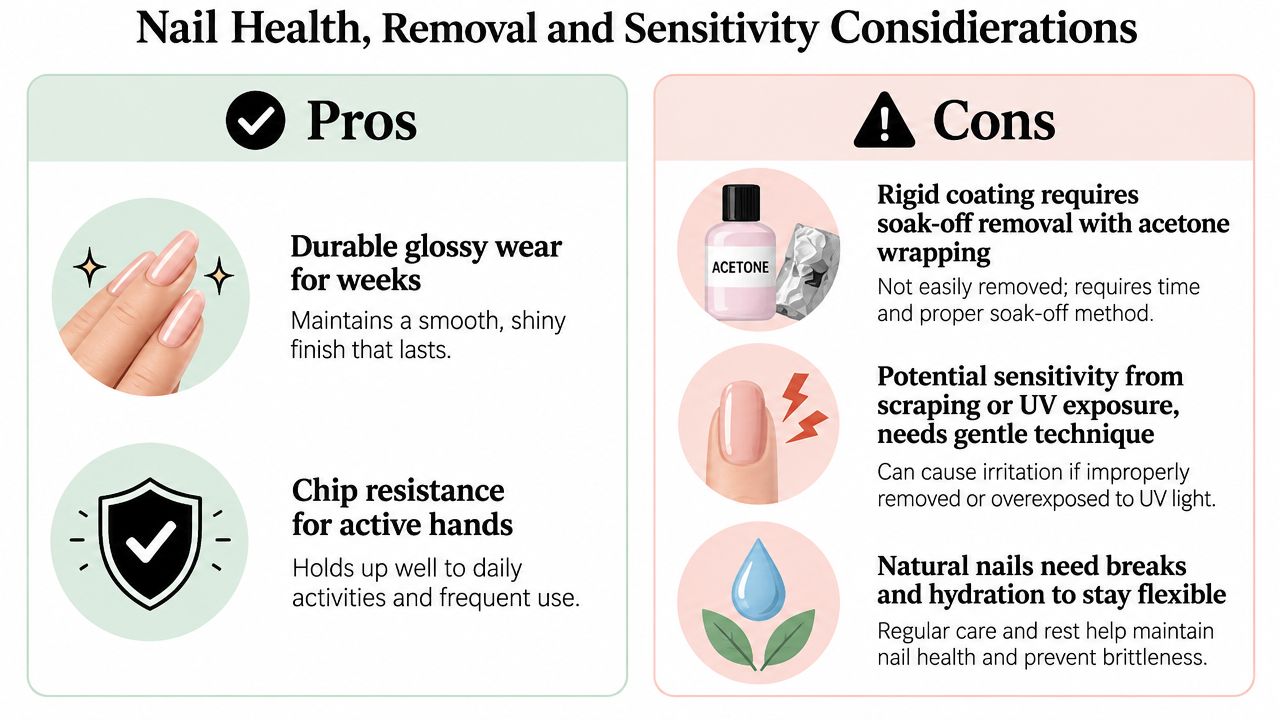
The part most comparisons under-explain is removal. Gel lasts because its coating is more rigid, but that same structure means it shouldn't be picked, peeled, or aggressively scraped away. A careful soak-off process, with filing used appropriately, helps reduce unnecessary stress on the nail surface.
Improper soaking, scraping, or extended exposure to acetone can contribute to brittleness, peeling, and surface thinning. Regular polish is generally easier to remove and places less demand on the nail plate during the changeover, which makes it a sensible option for frequent colour changes or nails that already feel weak.
A survey of gel-manicure side effects found that 75.2% of respondents reported effects after removal, compared with 48.3% during application and about 20% while wearing the manicure, with nail-plate changes occurring more often after removal. The findings are available in the peer-reviewed survey on gel manicure side effects.
Sensitivity and application quality
Gel systems can also involve acrylates, including 2-HEMA and ethylene glycol dimethacrylate, which dermatology reviews identify as important sensitizers. The 2025 narrative review of gel manicure risks identifies acrylate allergy as the best-documented concern, while describing UV-related carcinogenic risk as minimal under typical use.
The application method matters. Product should remain on the nail rather than the surrounding skin, and cuticle pushing should be gentle because small skin wounds can make acrylates easier to penetrate. If you've experienced unusual sensitivity after nail products before, tell your nail professional before the service.
A systematic review recorded allergic contact dermatitis in 62 cases, or 70.5%, mechanical nail damage in 23 cases, or 26.1%, and UV-induced skin lesions in 3 cases, or 3.4%, among reported gel-nail adverse events. Those figures come from the systematic review indexed by PubMed, and they describe reported cases rather than the experience of every gel client.
A gentle rule: if removal feels painful, stop the process and ask for a slower technique rather than accepting scraping or peeling.
Regular polish remains the lower-stress choice when you want frequent changes, simple removal, or a break from gel. With either service, attentive prep, clean tools, and respectful aftercare support a more comfortable experience.
Which Manicure Suits Your Stay in Lombok
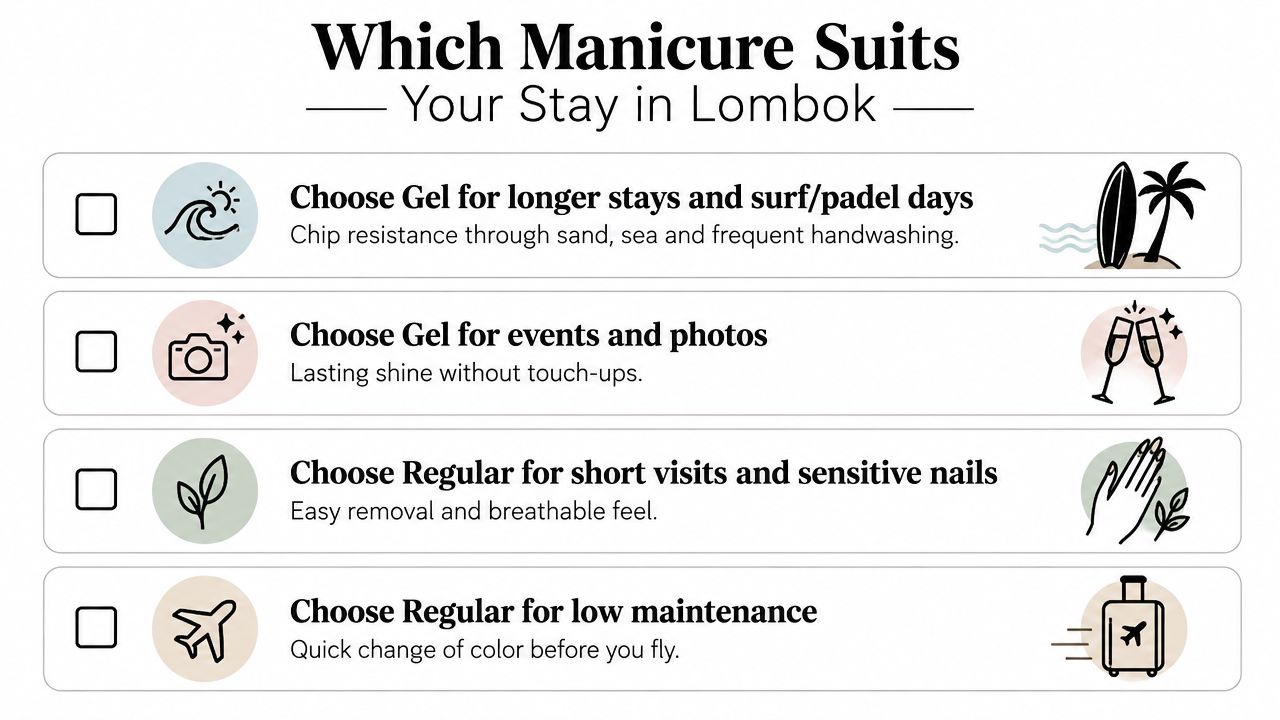
Your plans in Kuta Lombok offer the clearest guide. A brief visit with a beach morning and a few dinners places different demands on your manicure than a longer stay involving surf, padel, boat transfers, and excursions around Central Lombok.
Choose gel when your days are active
Gel suits longer stays when you want the finish to remain polished through beach outings, frequent handwashing, and changing plans. Moving between Kuta Beach and Mandalika, handling wet swimwear, or spending time on the courts can put regular polish under more pressure. Gel's cured surface works like a protective layer, helping reduce the need for touch-ups.
It also fits an event-focused itinerary. Wedding celebrations, engagement parties, sunset dinners, and photographs around Tanjung Aan benefit from a finish that keeps its shine while outfits and settings change. Your nails can look consistent from the first photograph through the final evening.
Plan the removal before you choose gel. If you are flying onward, arrange professional removal rather than lifting or peeling the coating yourself. The appointment becomes part of the travel plan, much like booking a transfer before an early departure.
Choose regular polish when flexibility matters
Regular polish is a comfortable choice for a shorter getaway or for travellers who enjoy changing colour with the day. You could wear a pale neutral for the beach, then choose a richer shade for dinner without committing to a longer-wear system.
It also suits anyone who prefers a lighter-feeling finish or wants simpler removal. If you may leave Lombok without time for another salon visit, regular polish avoids adding a separate gel-removal appointment to your itinerary.
At GLAZE, signature glazed finishes include chrome, pearl, and milk-glass looks for a softly reflective result. Nail care can be paired with a Balinese massage, deep tissue massage, aromatherapy, reflexology, facial, or a quiet drink from the specialty coffee and matcha bar.
At GLAZE you can book in advance before a beach day or evening plans. This leaves time to select your finish, allow for the appropriate service, and enjoy the appointment without rushing.
Aftercare That Keeps Your Manicure Looking Fresh
Island conditions are beautiful, but sun, salt water, sand, and repeated handwashing can all make your hands feel dry. Simple habits help preserve the appearance of either manicure without turning care into another task on your itinerary.
Protect the finish during beach days
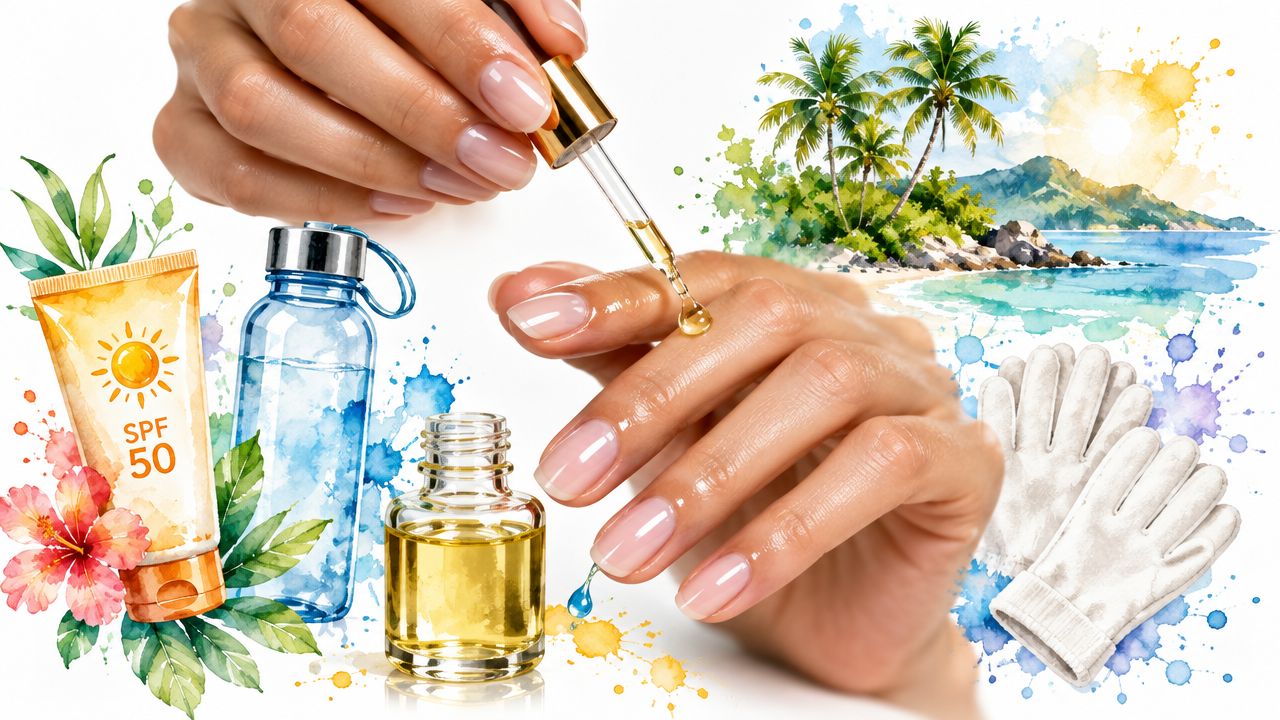
Apply cuticle oil or a nourishing hand product regularly, especially after swimming and washing your hands. Keep sunscreen on the backs of your hands, and avoid using your nails as tools to open packaging, lift labels, or scrape sand from small surfaces.
Sand can work beneath the free edge and create friction. Rinse your hands with fresh water after the beach, pat them dry rather than rubbing vigorously, and keep a small hand cream in your day bag.
Adjust care to the polish type
With regular polish, give the surface time to set before carrying luggage, opening a scooter compartment, or reaching into a beach bag. A small chip doesn't require removing the whole manicure. You can smooth the edge carefully and refresh the top coat if you have the right product available.
With gel, don't pick at lifting edges. Peeling the coating can pull at the nail surface, so arrange professional removal when the set has reached the end of its wear or begins to lift.
GLAZE's unhurried setting makes it easy to build nail care into a wider pause. You can book a manicure or pedicure, follow it with a facial or massage, and enjoy espresso, iced latte, ceremonial-grade matcha, fresh coconut, or herbal tea at the on-site bar before returning to your Lombok plans.
Making Your Choice and Booking at GLAZE House of Wellness
Your plans in Lombok can guide the choice:
- Choose gel for a longer stay, active beach days, frequent handwashing, or a glossy finish that shows fewer chips.
- Choose regular polish for a brief visit, frequent colour changes, or simpler removal before travelling onward.
- Ask for guidance first if nail products have caused sensitivity, or your nails look peeling, brittle, or thin.
- Plan removal at the time of booking whenever you choose gel. Removal is part of the service plan, not an afterthought.
GLAZE combines manicure, pedicure, and nail care with a broader wellness setting in Kuta Lombok. Other treatments include Balinese massage, deep tissue, aromatherapy, reflexology, cleansing, hydrating, and anti-aging facials, along with relaxation treatments and an on-site specialty coffee and matcha bar.
Reservations are available daily from 10:00 to 22:00, with advance scheduling through WhatsApp. Book around your plans, whether you want polished hands for photographs near Tanjung Aan, a reset after padel, or a quiet afternoon away from the heat.
Book at GLAZE - House of Wellness and choose the gel or regular finish that suits your trip. You can pair nail care with a Balinese massage, facial, or coffee and matcha pause.
- gel manicure vs regular manicure
- Kuta Lombok spa
- gel manicure guide
- regular manicure care
- Lombok nail services