Balinese Massage vs Swedish Massage
Compare Balinese massage vs Swedish massage to find your ideal treatment in Kuta Lombok. Discover techniques, pressure and benefits at GLAZE.
You've arrived in Kuta Lombok after a long flight, a day on Kuta Beach, or a surf session near Tanjung Aan. Your shoulders feel tight, your legs are pleasantly tired, and the idea of booking a massage sounds perfect. Then the practical question appears: Balinese massage vs Swedish massage, which one suits you better?
The answer depends less on which style sounds more luxurious and more on what your body needs today. Swedish massage offers a measured, flowing approach with light-to-moderate pressure. Balinese massage brings deeper, slower work together with acupressure, reflexology, and aromatherapy. Use the guide below to choose with confidence, whether you're recovering from travel, preparing for an evening in Mandalika, or looking for a calm wellness ritual in Central Lombok.
Table of Contents
- Finding Your Ideal Recovery in Kuta Lombok
- The Origins and Philosophy of Each Style
- Comparing Techniques Pressure and Sensory Experience
- Matching the Modality to Your Travel Needs
- The Modern Shift Toward Hybridized Bodywork
- Preparing for Your Session and Aftercare
- Elevating Your Wellness at GLAZE House of Wellness
Finding Your Ideal Recovery in Kuta Lombok
A guest arriving in Kuta Lombok after a flight often wants two things at once: relief from stiffness and a treatment that feels special enough to belong to the holiday. Swedish massage and Balinese massage can both create that restorative pause, but they take different routes.
Swedish massage is the clearer choice when you want a gentle, organised full-body experience. Its long, gliding strokes create a steady rhythm, making it suitable for first-time guests, low-to-medium intensity relaxation, and the familiar comfort of a predictable treatment. Balinese massage feels more layered. Slower pressure, targeted acupressure, reflexology, and aromatic oils create a richer sensory journey for guests who enjoy a firmer, more immersive style.
Consider the shape of your day. After a flight, Swedish may feel more comfortable if your body is generally tired but sensitive. After active time around Tanjung Aan, Selong Belanak, or Mandalika, Balinese massage may suit you if you prefer deliberate pressure around areas carrying muscular fatigue. Neither style should be selected as a test of endurance. A quality therapist can adjust the treatment so the experience remains calm, responsive, and comfortable.
Practical rule: Choose the massage that matches your present state, not the treatment that sounds most impressive on a menu.
The wider reason for booking matters, too. The most common reasons people seek massage include soreness, stiffness, or spasm at 49%, chronic pain management at 42%, and injury recovery or rehabilitation at 36%, according to MassageBook's massage therapy market analysis. Those figures point to a useful booking habit: tell the therapist whether you're seeking soft relaxation, post-travel ease, or focused work after activity.
The Origins and Philosophy of Each Style
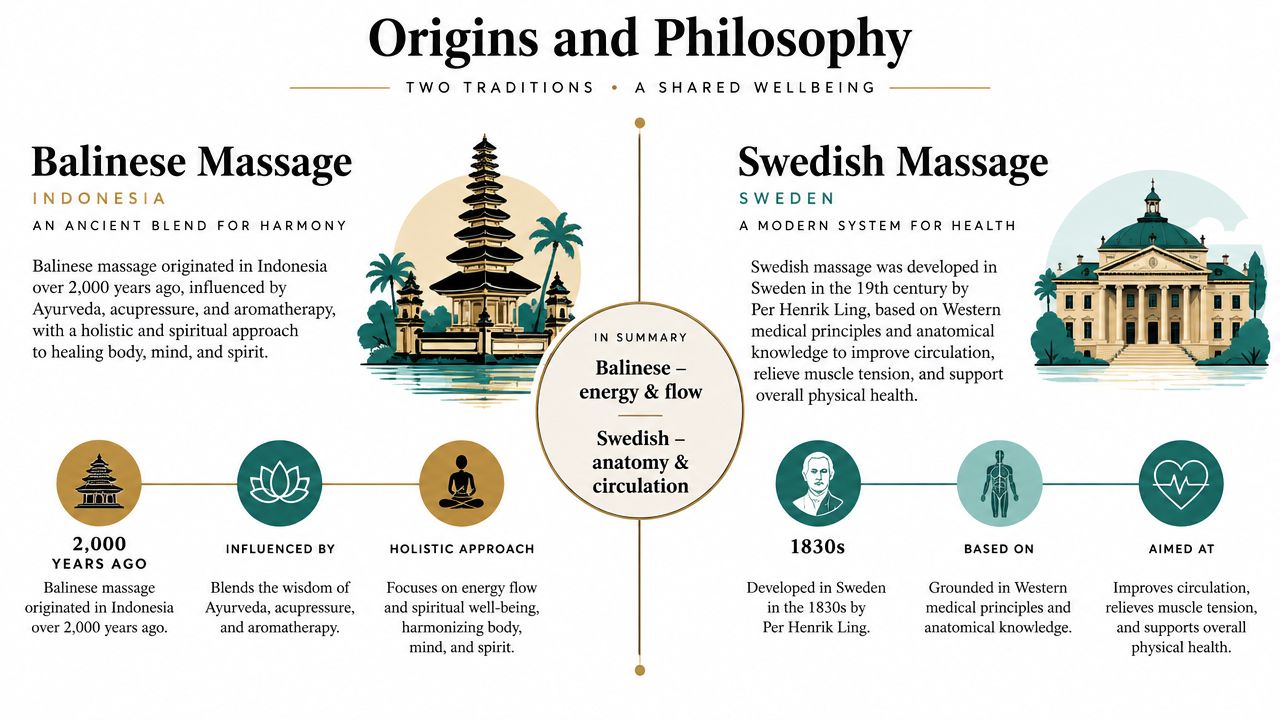
Swedish massage has a relatively clear modern chronology. It was systematised in the early nineteenth century through the work of Per Henrik Ling in the 1810s, and later stroke terminology was associated with Johan Georg Mezger. The classic vocabulary includes effleurage, petrissage, friction, tapotement, and vibration. A published history places Swedish massage's spread across the Atlantic to the United States in the 1850s, giving the method a defined European development and international expansion, as described in this history of Swedish massage.
Its philosophy is structured and physical. The therapist follows a recognisable sequence, working with long gliding movements, kneading, friction, tapping, percussion, vibration, and shaking. The emphasis is on organised contact with muscle tissue, circulation, and a consistent full-body flow. That structure explains why Swedish massage remains an accessible benchmark for guests who want a familiar, measured treatment.
Balinese massage comes from a different cultural timeline. It's described as an older Indonesian tradition shaped over centuries by Hindu, Buddhist, Indian, Chinese, and Southeast Asian influences. Some accounts trace the arrival of Hindu-Buddhist and Chinese healing ideas in the Indonesian archipelago to the eighth to tenth centuries, while written documentation of Balinese massage appeared much later, in the 1930s, according to this published comparison of body massage traditions.
A layered Indonesian tradition
Balinese massage is often presented as a hybrid rather than a single fixed technique. It combines elements associated with acupressure, reflexology, and aromatherapy, bringing physical pressure and sensory atmosphere into the same treatment. Cultural accounts also describe Indian Ayurvedic influence, Chinese pressure-point work, and Indonesian ritual traditions entering Bali as Hinduism and Buddhism spread through the region, as outlined in Karma Group's background on traditional Balinese massage.
That history doesn't mean every treatment is identical, or that a cultural label guarantees a particular result. It does mean Balinese massage carries a broader sensory and cultural identity than the highly standardised Swedish format. In Lombok, that distinction can make the treatment feel especially appropriate after a day spent outdoors, in warm air, salt water, and sunlight.
Comparing Techniques Pressure and Sensory Experience
The most noticeable difference is pressure. Swedish massage uses long gliding effleurage strokes with light-to-moderate pressure, while Balinese massage combines acupressure and reflexology with deeper, slower pressure, as explained in this technical overview of massage methods.
Swedish treatment usually begins with flowing strokes that warm the body and establish a calm pace. The therapist may then add kneading, friction, tapping, percussion, vibration, or shaking. The sequence feels coherent and circulatory, with one movement leading naturally into the next.
Balinese massage is more varied in sensation. The therapist may move between broad, slow pressure and more focused work at selected points. Aromatherapy adds a fragrant layer, while reflexology and acupressure make the treatment feel more intentional and multidimensional. The pressure can be firm, but it should remain adjustable. A good session never requires you to tolerate sharp or alarming discomfort.
Swedish versus Balinese massage comparison
| Feature | Swedish Massage | Balinese Massage |
|---|---|---|
| Overall style | Structured Western bodywork with a consistent full-body sequence | Hybrid Indonesian bodywork combining several influences |
| Stroke type | Long gliding effleurage, kneading, friction, tapping, vibration, and shaking | Slower, deeper pressure with acupressure and reflexology elements |
| Typical intensity | Light to moderate | Deeper and more deliberate |
| Sensory focus | Calm rhythm, predictable coverage, and circulatory emphasis | Pressure-point work, aromatic oils, and a more layered spa experience |
| Best fit | First-time guests, gentle relaxation, and low-to-medium intensity recovery | Guests who prefer firmer pressure and holistic, multi-modality treatment |
| What to communicate | Ask for lighter or moderate pressure and mention sensitive areas | Set clear boundaries around pressure and identify areas needing gentler work |
Swedish massage is the stronger default if you're unsure. It offers a dependable starting point and lets you understand how your body responds to massage without committing to a more intense sensory profile. Balinese massage is the better selection when you already know you enjoy deeper pressure, aromatic oils, and a treatment that shifts between broad strokes and focused contact.
Your comfort is the deciding factor. Pressure should be adjusted before it becomes distracting, not after.
Matching the Modality to Your Travel Needs
The best choice changes with your itinerary. A massage before an evening out at Mandalika calls for a different approach from a treatment after a demanding surf session. Book according to the next few hours as well as the tension you're carrying now.
After a flight
Choose Swedish massage if your main complaint is general stiffness, travel fatigue, or the need to settle into Lombok gently. The long strokes and light-to-moderate pressure create a smooth introduction to bodywork, particularly if you haven't had a massage recently or you're unsure how much pressure you prefer.
Balinese massage can also suit post-flight recovery when you want a more enveloping experience and your muscles respond well to firmer contact. Tell the therapist that you've travelled, and ask for a gradual opening rather than immediate heavy pressure.
After surfing or active exploring
After time in the water at Tanjung Aan, a walk around Kuta Beach, or an active day near Selong Belanak, your body may feel tired rather than stressed. Balinese massage is my recommendation when you want deeper, slower work and enjoy a multi-sensory treatment. Its acupressure and reflexology elements give the therapist more ways to vary the session without relying on one repetitive stroke.
Swedish massage is preferable if your muscles feel tender, your skin is sun-sensitive, or you want a lighter recovery treatment before another day outdoors. The goal is to leave feeling restored, not overstimulated.
Before a wedding or special evening
Swedish massage is the safer pre-event choice. Its gentler, predictable rhythm supports relaxation without making the appointment feel like an intensive bodywork session. Leave enough time to shower, dress, and move slowly afterwards.
Balinese massage suits a quieter evening when you want the treatment itself to be the centre of the experience. It works particularly well for guests who enjoy aromatic oils, deeper pressure, and a more immersive ritual.
For chronic pain or injury recovery, don't treat either style as a medical solution. Share relevant information with the therapist, describe what movements feel comfortable, and follow professional medical guidance where appropriate. The market data makes the underlying point clearly, people book massage for different physical goals, so the most useful appointment begins with an honest conversation rather than a label.
The Modern Shift Toward Hybridized Bodywork
The strict choice between Balinese and Swedish massage is becoming less useful in premium wellness settings. Guests increasingly want treatments that respond to their pressure preference, energy level, travel schedule, and recent activity. A skilled therapist can use the flowing structure of Swedish massage as a foundation, then introduce selected elements associated with Balinese bodywork.
This shift reflects a wider movement in the wellness industry. The Global Wellness Institute's 2026 trend note identifies the growing integration of Asian massage techniques into Western practice, alongside recovery-program integration and modality blending. The direction is clear. Personalisation matters more than strict loyalty to one tradition.
Ask for a treatment brief
Instead of saying only, “I want Balinese,” describe the experience you want:
- Pressure: light, moderate, firm, or changing by body area.
- Focus: shoulders, lower legs, back, feet, or a balanced full-body session.
- Mood: quiet and restorative, aromatic and sensory, or structured and grounding.
- Context: post-flight fatigue, recent surfing, heat exposure, or an upcoming event.
- Boundaries: areas to avoid, sensitivities, allergies, and anything that feels uncomfortable.
A customised blend might begin with long Swedish-style strokes to create warmth and ease, then move into slower pressure or selected acupressure work. It might also stay entirely gentle if your body is tired from sun, travel, or insufficient rest. The treatment should adapt to you, not force you to perform the identity of a particular modality.
The modern luxury is responsiveness. A personalised session respects tradition while making room for the individual guest.
This is especially relevant in Lombok, where one day can move from beach activity to café time to a quiet evening in Kuta. Your needs may change between visits. You might choose Swedish massage after arrival, a Balinese session after several active days, and a blended approach when you want both calm rhythm and firmer attention.
Preparing for Your Session and Aftercare
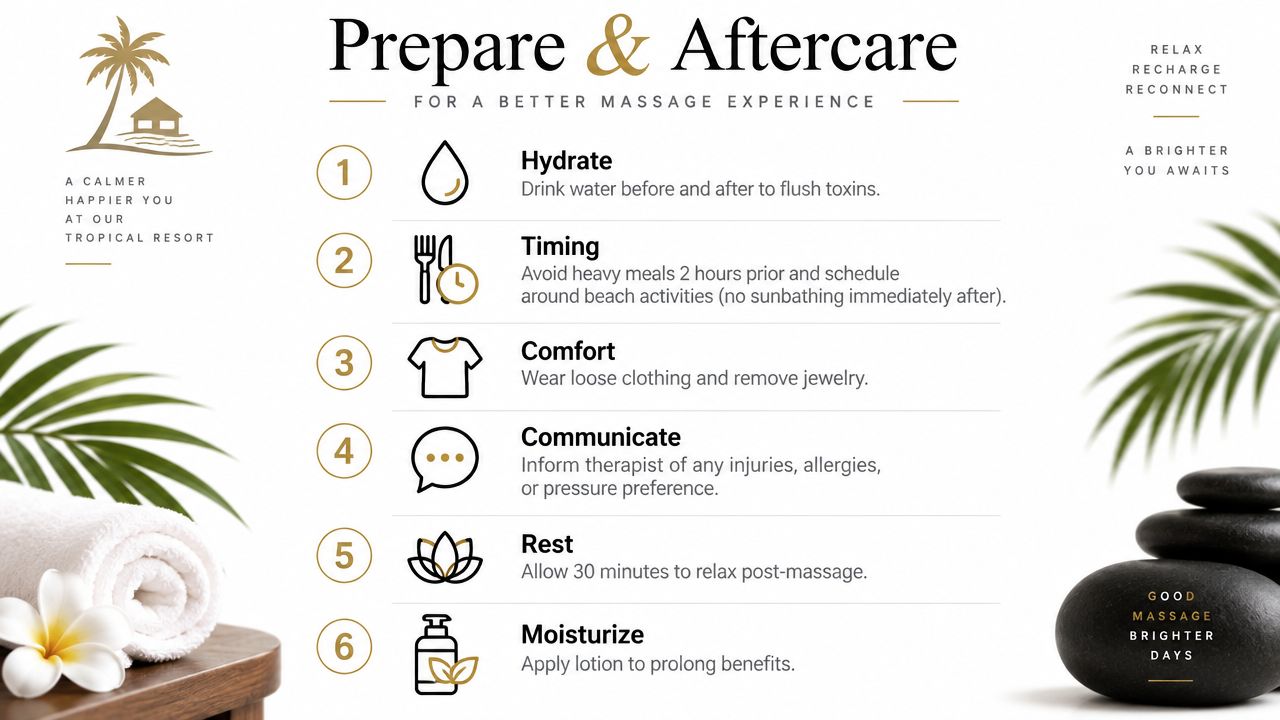
A little preparation helps you enjoy the treatment without rushing. Schedule your massage away from the busiest part of your beach day, and avoid arriving overheated, hurried, or immediately after a heavy meal. Loose clothing makes the transition back into holiday time easier.
Before you arrive
- Hydrate: Drink water before and after the appointment as part of a comfortable routine.
- Time it well: Leave space around swimming, surfing, sunbathing, and meals. Avoid heavy food close to the session.
- Dress comfortably: Wear loose clothing and remove jewellery before treatment.
- Share useful details: Tell the therapist about injuries, allergies, sensitive areas, and your preferred pressure.
After the treatment
Give yourself a quiet pause before returning to a full itinerary. Walk gently, stretch only within a comfortable range, and avoid scheduling intense activity immediately afterwards. If you've had deeper pressure, an unhurried evening is usually more appealing than rushing straight back into the heat.
Moisturise if your skin feels dry after time outdoors, and continue drinking water according to your normal needs. Notice how your body feels rather than judging the session by intensity. A successful treatment leaves you comfortable, settled, and ready to enjoy the slower rhythm of Central Lombok.
Elevating Your Wellness at GLAZE House of Wellness
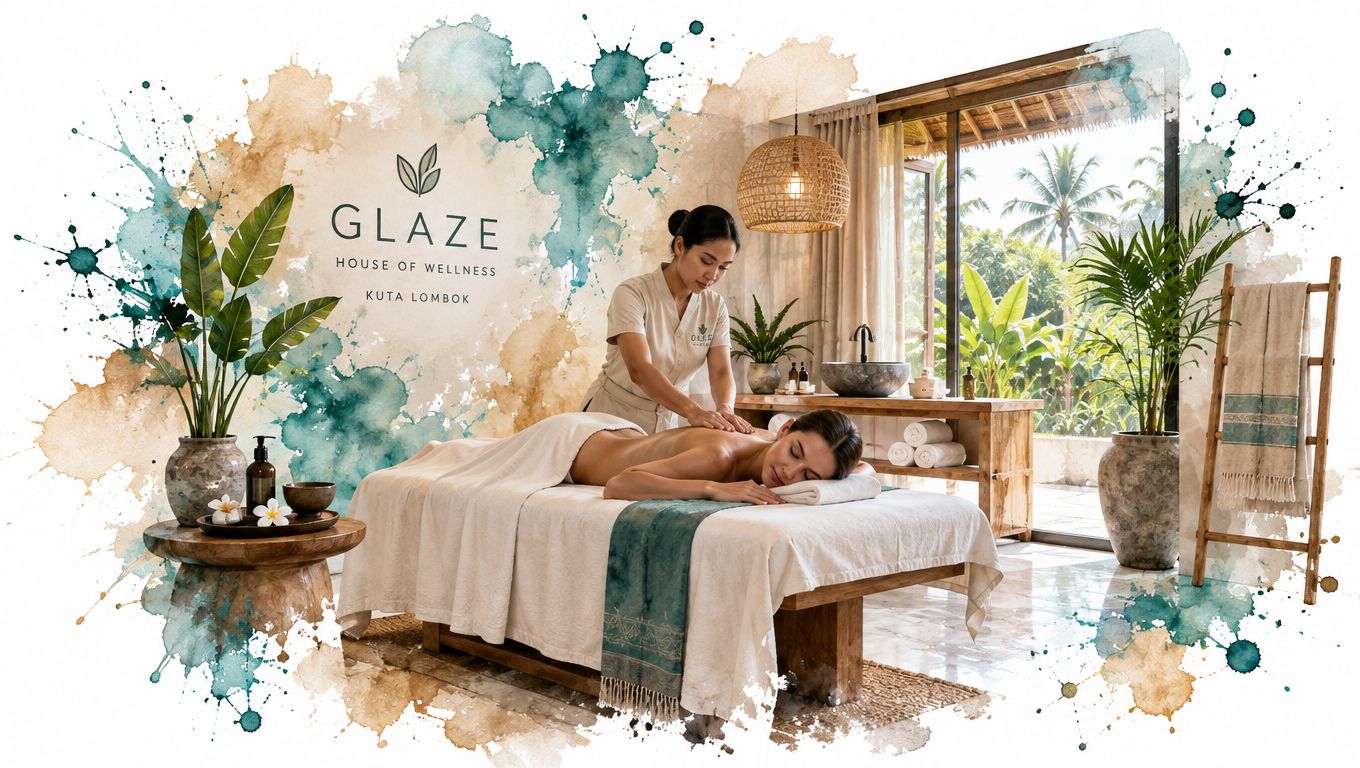
At GLAZE, House of Wellness, Jl. Raya Kuta No. 20, Kuta, Central Lombok, NTB 83573, the setting supports an unhurried approach to choosing bodywork. After a morning at Selong Belanak, a swim near Kuta Beach, or time exploring Mandalika, you can make the appointment part of the day rather than an afterthought.
The menu includes Balinese massage, deep tissue, aromatherapy, and reflexology, alongside cleansing, hydrating, and anti-aging facials, manicure, pedicure and nail care, and relaxation and wellness treatments. That range makes it easier to shape the visit around your actual plans. Choose Balinese massage when you want deeper, slower pressure with aromatic detail, or ask the team about the most comfortable option when you prefer a gentler session.
The on-site specialty coffee and matcha bar gives the visit a natural beginning or ending. An espresso, iced latte, ceremonial-grade matcha, fresh coconut, cold-pressed juice, or herbal tea can extend the pause before you return to the beach, your villa, or dinner in Kuta Lombok.
For most first-time visitors comparing Balinese massage vs Swedish massage, I recommend starting with your desired pressure and the shape of your day. If you want a culturally distinctive, multi-sensory treatment, reserve Balinese massage. If you want measured, gentle full-body relaxation, ask for a Swedish-style experience where available, or discuss a personalised alternative with the therapist.
GLAZE - House of Wellness offers Balinese massage, aromatherapy, reflexology, deep tissue, facials, nail care, relaxation treatments, and an on-site coffee and matcha bar in Kuta Lombok. For calm, considered guidance on the right treatment after travel, beach time, or active recovery, visit GLAZE - House of Wellness and reserve your appointment.
- balinese massage
- swedish massage
- kuta lombok spa
- massage comparison
- lombok wellness